
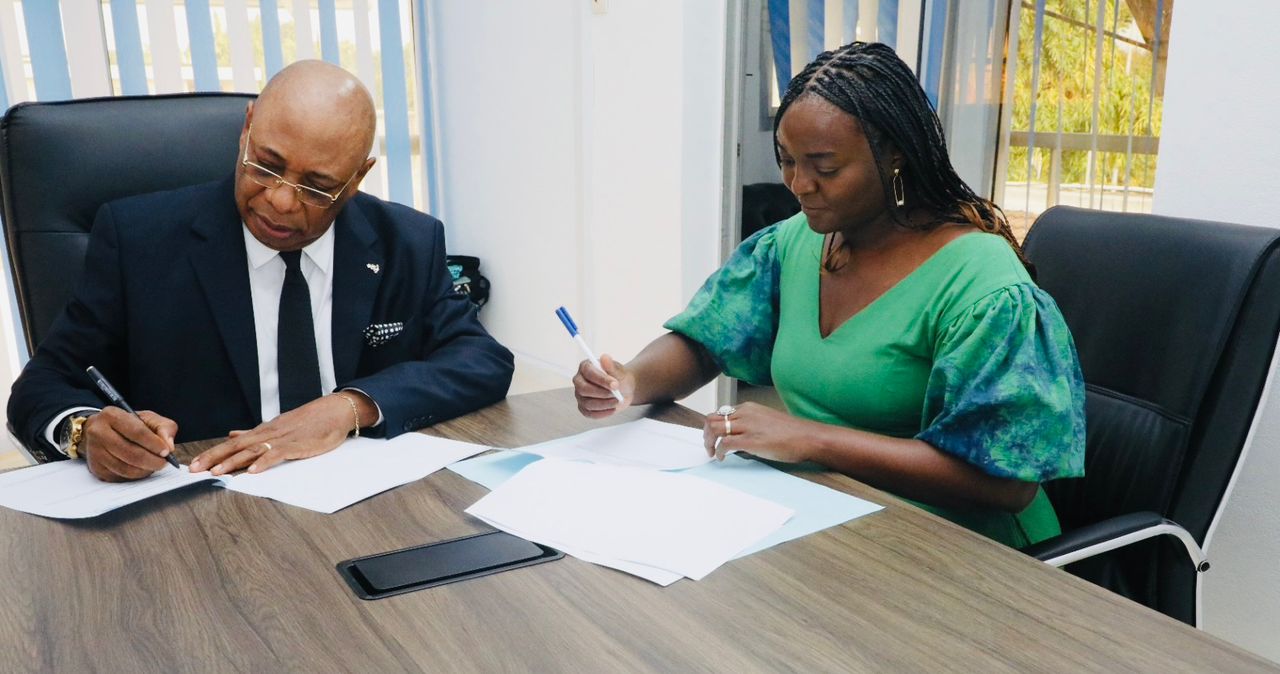
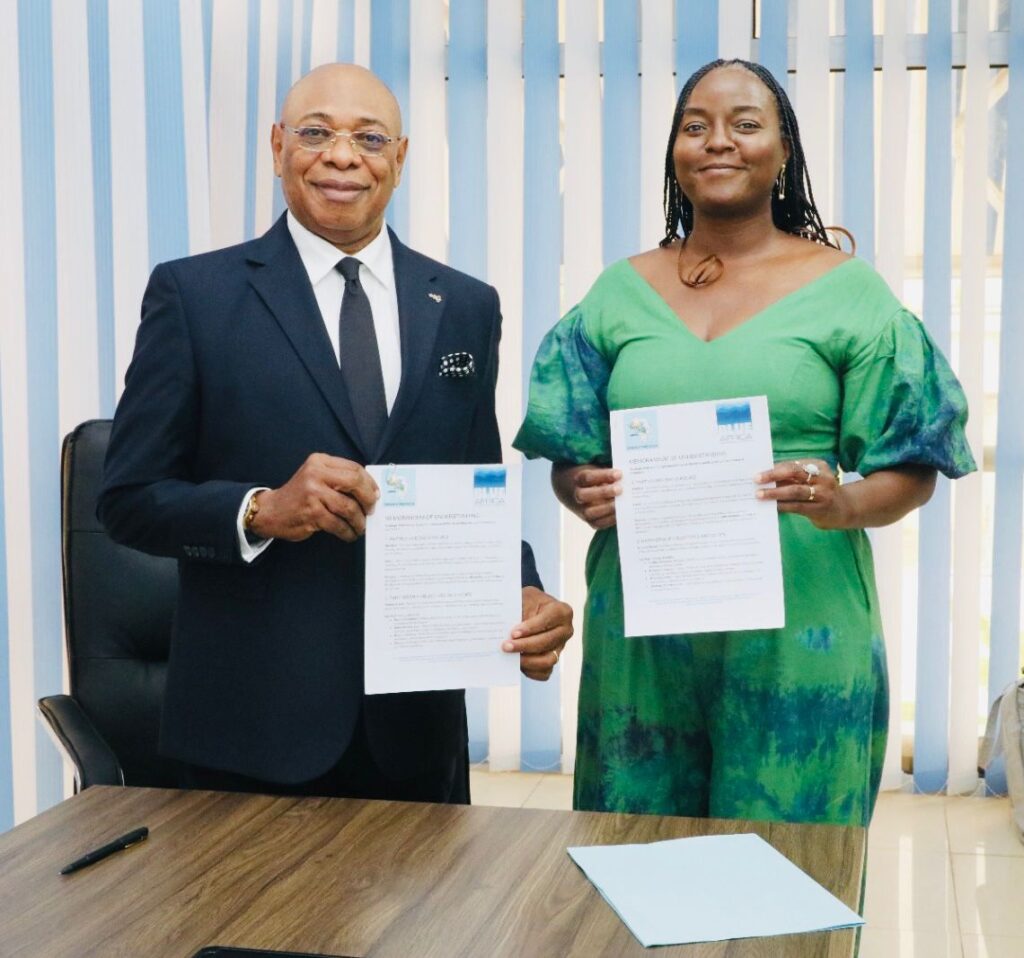
In a move that could reshape Africa’s maritime future, the Blue Africa Conference & Exhibition (BACE) has signed a landmark five-year strategic partnership with the Maritime Organization of West and Central Africa (MOWCA).
The agreement, inked in Abidjan, underscores the critical role of the maritime sector in unlocking Africa’s vast blue economy potential while tackling urgent challenges of trade, sustainability, and youth employment.
The signing ceremony brought together maritime leaders, government representatives, and private sector stakeholders, with Mudzithe Phiri, Event Director of BACE, and Dr. Paul Adalikwu, Secretary-General of MOWCA, leading the historic agreement.
Africa’s extensive 30,000-kilometre coastline, stretching across more than 38 countries, represents a gateway to both intra-African and global trade. With the African Continental Free Trade Agreement (AfCFTA) seeking to integrate a $3.4 trillion market, maritime infrastructure and cooperation are viewed as key drivers of sustainable economic transformation.
Speaking during the signing, Phiri emphasized that Africa’s oceans must serve as bridges, not barriers, to prosperity.
“Our oceans connect us to each other first, unlocking the AfCFTA opportunity, and they also connect us to the rest of the world, with strategic access to global markets. This positions us perfectly as we lean towards becoming producers and refining our vast raw materials, creating products that we can trade amongst ourselves and to the rest of the world,” he said.
Phiri also highlighted the spirit of unity behind the collaboration, pointing out that it brings together companies and institutions from South Africa, Kenya, Nigeria, Côte d’Ivoire, and beyond. “This collaboration demonstrates the power of African unity. We are leveraging media, networking, and strategic partnerships to drive meaningful change.”
Central to the partnership is Africa’s demographic challenge: nearly 60% of the continent’s population is under the age of 25. With millions entering the job market annually, the blue economy is being positioned as an employment generator.
From maritime logistics and fisheries to coastal tourism and shipbuilding, Africa’s oceans provide fertile ground for innovation and youth entrepreneurship.
“Africa is a young market, and the jobs our youth need are in the blue economy,” Phiri stressed. “From maritime logistics to coastal tourism—where our best recreational moments happen, on the beach—we’re creating pathways for young entrepreneurs to build sustainable careers in these growing sectors.”
The agreement outlines plans to launch youth-focused programs, including training initiatives, innovation hubs, and mentorship schemes linked to maritime enterprises.
At the heart of the partnership is Dr. Paul Adalikwu, the first Nigerian to lead MOWCA in its 50-year history. Since his election in 2021, he has introduced reforms that positioned MOWCA as a continental force in maritime governance.
Dr. Adalikwu’s achievements include:
Regional Maritime Development Bank (RMDB): spearheading Africa’s first maritime financing institution.
Strategic Partnerships: securing collaborations with the African Development Bank (AfDB) for dry dock development across the region.
Maritime Security: overseeing the “Deep Blue Project” and Nigeria’s anti-piracy legislation, which helped reduce piracy in the Gulf of Guinea.
International Recognition: coordinating Nigeria’s participation at the International Maritime Organization (IMO) and hosting the 2019 Global Maritime Security Conference.
“We at MOWCA are thrilled for this opportunity to partner with such a formidable entity to draw attention and publicize the enormous potential of the Blue Economy in Africa,” said Dr. Adalikwu, describing the partnership as a milestone for regional cooperation.
The partnership has already received strong backing from the Nigerian government, particularly the Federal Ministry of Marine and Blue Economy. The ministry has officially endorsed the Blue Africa Conference & Exhibition, with a press conference scheduled in coming weeks to unveil additional government support initiatives.
Industry leaders have also expressed optimism that the collaboration will attract significant private sector investments in shipping, port development, and maritime technology.
The five-year BACE–MOWCA partnership will focus on five key pillars:
Trade Catalyst: positioning the maritime sector as the backbone of AfCFTA trade integration.
Security Cooperation: strengthening regional security through collaboration and public-private partnerships.
Youth Employment: creating sustainable opportunities in maritime, fisheries, and tourism.
Sustainability: promoting ocean resource development that balances growth with environmental protection.
Infrastructure Investment: facilitating investment in ports, shipyards, and marine technology.
Experts argue that these priorities are essential to secure Africa’s place in global trade networks. The World Bank has estimated that effective maritime infrastructure could reduce Africa’s trade costs by up to 30%, unlocking billions in economic potential.
The term “blue economy” refers to the sustainable use of ocean resources for economic growth, improved livelihoods, and environmental preservation. For Africa, which controls vast fisheries, untapped energy reserves, and critical shipping routes, the blue economy is estimated to be worth over $296 billion annually.
Yet, challenges remain. Piracy in the Gulf of Guinea, underdeveloped ports, and environmental risks threaten progress. MOWCA’s partnership with BACE is seen as a step toward addressing these structural gaps by promoting dialogue, investment, and innovation.
Blue Africa Conference & Exhibition (BACE): The premier continental platform dedicated to unlocking Africa’s oceanic resource potential. It convenes governments, investors, innovators, and entrepreneurs to drive sustainable maritime development.
Maritime Organization of West and Central Africa (MOWCA): Established in 1975, MOWCA represents 25 member states. Under Dr. Adalikwu’s leadership, the organization is transitioning into the African Maritime Organization (AMO), expanding its mandate to the entire continent.
BACE has urged stakeholders and the general public to follow its social media platforms for updates on upcoming events, including the next conference, which will spotlight investment opportunities in shipping and coastal tourism.
Website: www.blueeconomy.africa
LinkedIn: Blue Africa Conference & Exhibition
X (Twitter): @blueafricaconex
Instagram: @blueafricaconex
Facebook: Blue Africa
TikTok: @blueafricaconex
Analysts say the BACE–MOWCA alliance could mark a turning point in Africa’s maritime history. By combining continental cooperation with regional expertise, the partnership sets the stage for Africa to control its maritime narrative shifting from dependency on foreign shipping routes to becoming a global maritime hub.
“This partnership is not just about signing a document; it is about shaping the future of our continent. Our oceans are our greatest asset, and through collaboration, we can make them the gateway to prosperity for generations to come.”